- Page 1
- Page 2
- Page 3
- Page 4
- Page 5
- Page 6
- Page 7
- Page 8
- Page 9
- Page 10
- Page 11
- Page 12
- Page 13
- Page 14
- Page 15
- Page 16
- Page 17
- Page 18
- Page 19
- Page 20
- Page 21
- Page 22
- Page 23
- Page 24
- Page 25
- Page 26
- Page 27
- Page 28
- Page 29
- Page 30
- Page 31
- Page 32
- Page 33
- Page 34
- Page 35
- Page 36
- Page 37
- Page 38
- Page 39
- Page 40
- Page 41
- Page 42
- Page 43
- Page 44
- Page 45
- Page 46
- Page 47
- Page 48
- Page 49
- Page 50
- Page 51
- Page 52
- Page 53
- Page 54
- Page 55
- Page 56
- Flash version
© UniFlip.com
- Page 2
- Page 3
- Page 4
- Page 5
- Page 6
- Page 7
- Page 8
- Page 9
- Page 10
- Page 11
- Page 12
- Page 13
- Page 14
- Page 15
- Page 16
- Page 17
- Page 18
- Page 19
- Page 20
- Page 21
- Page 22
- Page 23
- Page 24
- Page 25
- Page 26
- Page 27
- Page 28
- Page 29
- Page 30
- Page 31
- Page 32
- Page 33
- Page 34
- Page 35
- Page 36
- Page 37
- Page 38
- Page 39
- Page 40
- Page 41
- Page 42
- Page 43
- Page 44
- Page 45
- Page 46
- Page 47
- Page 48
- Page 49
- Page 50
- Page 51
- Page 52
- Page 53
- Page 54
- Page 55
- Page 56
- Flash version
© UniFlip.com
T OYO TA T R A I L S
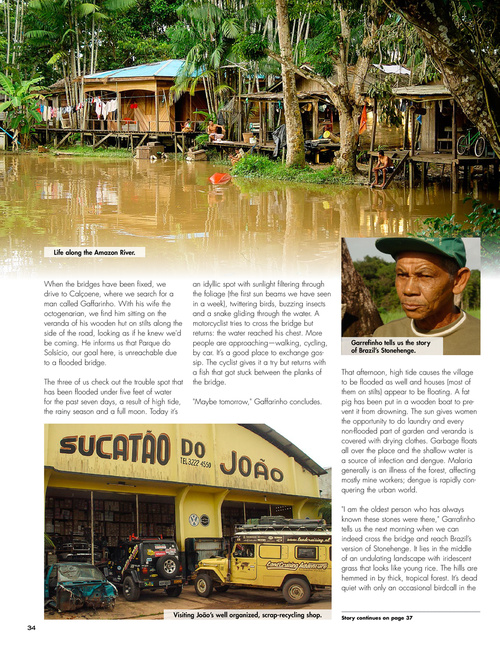
Life along the Amazon River.
When the bridges have been fixed, we drive to Calçoene, where we search for a man called Gaffarinho. With his wife the octogenarian, we find him sitting on the veranda of his wooden hut on stilts along the side of the road, looking as if he knew we'd be coming. He informs us that Parque do Solsício, our goal here, is unreachable due to a flooded bridge. The three of us check out the trouble spot that has been flooded under five feet of water for the past seven days, a result of high tide, the rainy season and a full moon. Today it’s
an idyllic spot with sunlight filtering through the foliage (the first sun beams we have seen in a week), twittering birds, buzzing insects and a snake gliding through the water. A motorcyclist tries to cross the bridge but returns: the water reached his chest. More people are approaching—walking, cycling, by car. It’s a good place to exchange gossip. The cyclist gives it a try but returns with a fish that got stuck between the planks of the bridge. "Maybe tomorrow," Gaffarinho concludes.
Garrefinho tells us the story of Brazil’s Stonehenge.
That afternoon, high tide causes the village to be flooded as well and houses (most of them on stilts) appear to be floating. A fat pig has been put in a wooden boat to prevent it from drowning. The sun gives women the opportunity to do laundry and every non-flooded part of garden and veranda is covered with drying clothes. Garbage floats all over the place and the shallow water is a source of infection and dengue. Malaria generally is an illness of the forest, affecting mostly mine workers; dengue is rapidly conquering the urban world. "I am the oldest person who has always known these stones were there," Garrafinho tells us the next morning when we can indeed cross the bridge and reach Brazil’s version of Stonehenge. It lies in the middle of an undulating landscape with iridescent grass that looks like young rice. The hills are hemmed in by thick, tropical forest. It’s dead quiet with only an occasional birdcall in the
Visiting João’s well organized, scrap-recycling shop.
34
Story continues on page 37